2026 Self-Esteem Workbook for Kids KDP: A Thoughtful Tool for Nurturing Resilience in a Rapidly Changing World
Children today grow up amid unprecedented access to information—and unprecedented pressure to perform, compare, and conform. Social media algorithms amplify curated perfection before kids have fully developed critical thinking or emotional regulation skills. Classroom environments increasingly emphasize standardized outcomes over individual growth. Meanwhile, educators, parents, and caregivers report rising concerns about anxiety, self-criticism, and disengagement among elementary-aged learners. Into this landscape arrives the 2026 Self-Esteem Workbook for Kids KDP: not as a quick fix, but as a grounded, intentional, and beautifully structured companion for daily emotional development.
More Than a Calendar—A Scaffold for Inner Strength
The 2026 Self-Esteem Workbook for Kids stands apart because it integrates time-based structure with developmental psychology. It’s anchored in the 2026 calendar—complete with holidays, monthly themes, weekly reflections, and daily prompts—but every date serves a purpose beyond scheduling. Each page invites children to name emotions, reframe setbacks, practice gratitude, or identify personal strengths using age-appropriate language and visual cues. Unlike generic planners, this workbook embeds evidence-informed practices—like cognitive reframing through affirmations, embodied awareness via mindful check-ins, and identity-affirming journaling—into routines that feel familiar and safe.
For creators and educators, this design reflects a broader shift: from delivering content *to* children, to co-constructing meaning *with* them. The workbook doesn’t assume a “deficit” in kids’ self-worth; instead, it assumes curiosity, capacity, and the right to celebrate small, authentic wins. That mindset aligns with modern pedagogical research emphasizing social-emotional learning (SEL) as foundational—not supplemental—to academic success.
Why Timing Matters: The 2026 Context for Emotional Literacy Tools
By 2026, digital literacy is no longer just about screen time—it’s about emotional navigation in hybrid spaces. Kids toggle between virtual classrooms, gaming communities, and in-person friendships, often without explicit guidance on how to process feedback, manage comparison, or assert boundaries. At the same time, schools are adopting SEL frameworks more deliberately, and many districts now require or incentivize trauma-informed, strengths-based curricula. Parents, too, are moving past “just be confident” messaging toward concrete tools—like affirmation cards, reflection journals, or weekly self-care checklists—that foster consistency over intensity.
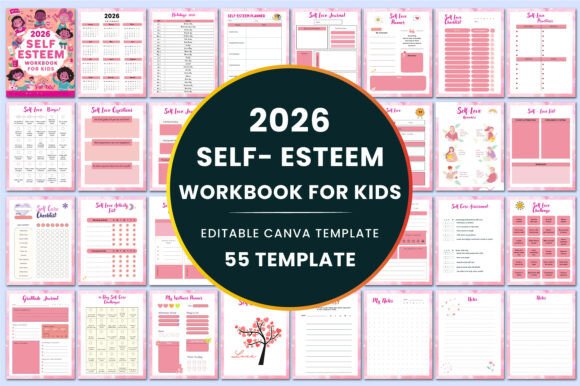
The 2026 Self-Esteem Workbook for Kids KDP meets this moment by offering what professionals call “low-barrier, high-impact” support. Its daily planner section includes gentle prompts like “What made me smile today?” or “One thing I did well was…” rather than demanding deep introspection. Its self-love bingo and affirmation trackers turn abstract concepts into tangible habits. And its integration of 2026 holidays—like kindness-themed February activities or gratitude-focused Thanksgiving pages—connects emotional growth to real-world rhythms, not isolated lessons.
Practical Value for Creators, Educators, and Caregivers
For KDP authors and independent creators, this workbook exemplifies how niche specificity builds trust. Rather than competing in the saturated “kids journal” category, it carves space at the intersection of developmental psychology, practical planning, and inclusive design. Its specifications—including a self-love affirmation tracker, daily self-love note prompts, and 30-day self-care challenges—aren’t decorative. They reflect real usage patterns observed across classrooms and homes: short attention windows, need for repetition, desire for choice, and value placed on visible progress.
Educators report that students respond especially well to the self-love checklist and weekly self-love journal sections when used during morning meetings or advisory periods. These aren’t add-ons—they’re built-in scaffolds that reduce prep time while increasing student ownership. One third-grade teacher in Ohio shared how her class uses the “Self-Love Bingo” grid during transitions: students earn stamps not for compliance, but for naming feelings, offering kind words to peers, or trying something new—even if they don’t “win.” That subtle pivot—from performance to presence—mirrors what psychologists call “process praise,” proven to strengthen intrinsic motivation.
For caregivers, the workbook’s dual-layer design offers quiet utility. The front half engages the child directly; the back includes optional caregiver notes—brief, non-prescriptive suggestions like “Try asking, ‘What helped you feel brave today?’ instead of ‘Were you brave?’” This respects parental expertise while offering gentle entry points into emotionally intelligent conversations.
Design Choices That Reflect Evolving Expectations
Today’s buyers—whether homeschooling parents, school counselors, or gift shoppers—look beyond aesthetics. They scan for intentionality: Is the paper thick enough for markers? Are prompts inclusive of neurodiverse thinkers? Does the layout avoid visual overwhelm? The 2026 Self-Esteem Workbook for Kids answers yes: clean typography, ample white space, open-ended drawing zones, and affirmations phrased in active, present-tense language (“I am learning,” not “I will be”).
This attention to detail mirrors larger market shifts. Consumers increasingly favor products that support *ongoing practice*, not one-time inspiration. A gratitude journal alone may gather dust; a my wellness planner with integrated mood tracking, hydration reminders, and reflection prompts invites sustained use. Similarly, the workbook’s self-care bucket list and self-care assessment encourage kids to define care on their own terms—whether that’s building a fort, reading under a blanket, or helping water the plants—rather than prescribing adult-defined “healthy habits.”
Realistic Impact—Not Overnight Transformation
It’s important to name what this workbook does—and doesn’t—promise. It won’t erase systemic inequities, replace therapeutic support for children with clinical needs, or override harmful messaging from external sources overnight. What it *does* offer is repetition, rhythm, and resonance. When a child fills out the daily self-love note three times a week for six months, they’re not just completing a task—they’re reinforcing neural pathways tied to self-recognition and compassionate self-talk. When they revisit their self-love journey entries across January and June, they see growth not as a destination, but as a series of observable moments: “I tried the math problem even though I was nervous,” “I told my friend I liked their drawing.”
That kind of documentation matters—for kids, yes, but also for adults who support them. A counselor can use the self-love questions section to guide goal-setting. A parent can glance at the weekly self-love journal to notice patterns—maybe their child writes more about friendship in March, or draws more self-portraits after a family move. These aren’t data points to optimize; they’re quiet invitations to listen more deeply.
Looking Ahead: Why This Fits Beyond 2026
The 2026 Self-Esteem Workbook for Kids KDP is designed for one year—but its philosophy extends further. As AI tools increasingly shape education and communication, the human capacities it nurtures—self-awareness, emotional articulation, ethical reflection—become more essential, not less. Future iterations may incorporate QR-linked audio affirmations or printable companion cards, but the core remains unchanged: helping children recognize their inner resources long before the world asks them to prove their worth.
For creators building in the KDP space, it signals an opportunity: tools that honor developmental stages while meeting practical needs—planning, reflection, celebration—will continue gaining traction. For educators and families, it reaffirms something simple but vital: confidence isn’t taught in lectures. It’s practiced—one daily note, one mindful breath, one honest “I’m still learning”—day after day.