🌿 Gratitude Journal Template
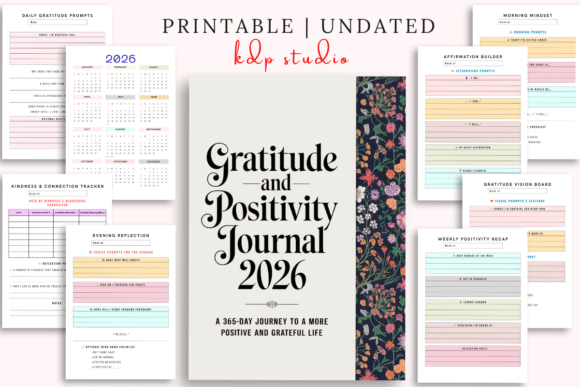
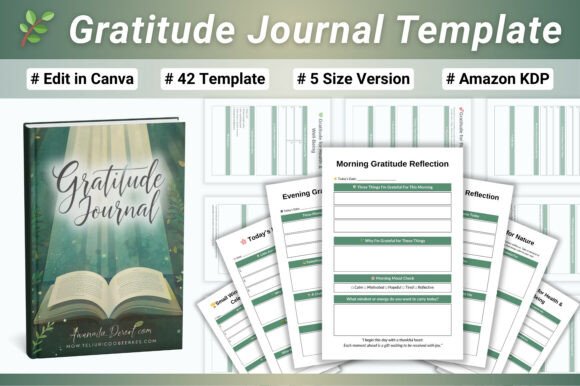
Gratitude isn’t just a feel-good concept—it’s a research-backed practice that reshapes neural pathways, lowers stress biomarkers, and strengthens emotional resilience. The 🌿 Gratitude Journal Template puts that science into action with intentionality and simplicity. Designed for real lives—not perfect ones—it’s a 42-page printable workbook that meets you where you are: whether you’re juggling client deadlines, homeschooling two kids, launching a side project, or simply trying to remember what calm feels like before your next Zoom call.
A Thoughtfully Structured Tool—Not Just Another Checklist
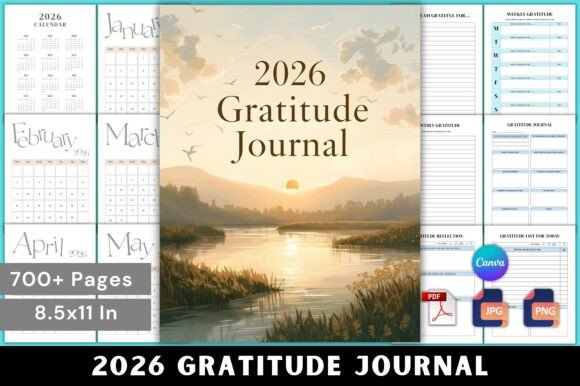
This isn’t a blank notebook with “Gratitude” stamped on the cover. Every page serves a purpose rooted in behavioral psychology and mindfulness pedagogy. The template balances structure with flexibility: undated pages let you start mid-week, skip a day without guilt, or revisit prompts months later. Its five size options—US Letter, A4, A5, 6x9 (Half US Letter), and compact A5—mean it adapts to your physical space and workflow: taped beside your monitor, tucked in a bullet journal, clipped into a teacher’s lesson planner, or folded into a freelancer’s travel binder.
The layout avoids visual clutter. Clean typography, ample margins, and intentional white space reduce cognitive load—critical when energy is low or attention is fragmented. And because it’s print-ready in high-resolution PDF, it renders crisply whether you’re using a laser printer at your co-working space or an inkjet at home.
Where It Fits—and Why It Sticks
Professionals use the 🌿 Gratitude Journal Template as a quiet counterweight to high-stakes decision-making. One marketing director told us she opens her morning gratitude log *before* checking email—just three lines about what she appreciates, what she intends to bring to the day, and one small win from yesterday. That habit, she said, “shifts my default from scarcity to stewardship.”
Educators integrate the Acts of Kindness Tracker and Weekly Gratitude Overview into social-emotional learning (SEL) routines—no prep required. Students reflect quietly for five minutes, then share optional insights. The result? Fewer reactive conflicts, stronger peer connections, and measurable growth in empathetic language during class discussions.
Freelancers and solopreneurs rely on the Daily Wins & Joy Notes section to document micro-successes often lost in hustle culture: a clear scope agreement, a positive client comment, finishing a draft ahead of schedule. Over time, those entries become tangible evidence of progress—vital during dry spells or imposter-heavy seasons.
Mindful Design, Real-World Utility
The Mood & Emotion Tracker doesn’t ask for clinical precision—just honest, low-effort notation. A color-coded scale (not numbered) invites intuitive response. Paired with the Energy Check, it reveals patterns: e.g., “I’m most energized after walking *before* coffee, not after,” or “My focus dips sharply on days I skip lunch.” That data informs boundary-setting—not self-critique.
The Self-Care Reflection Pages avoid prescriptive lists (“Do yoga! Drink water!”). Instead, they prompt: What restored me this week? What did I assume was ‘selfish’—but actually kept me grounded? That nuance matters for caregivers, founders, and anyone whose role demands constant giving.
And the Gratitude Jar reflection? It’s not metaphorical. Print the page, cut out the “notes,” write brief thanks on each, and drop them in a real jar. At month’s end, read them aloud—or hand them to someone who showed up for you. That tactile ritual bridges digital habit-building with embodied meaning.
Practical Considerations Before You Print
First: match size to function. Use US Letter or A4 if you prefer writing with a pen and want room for longer reflections. Choose A5 or 6x9 if portability matters—ideal for creatives sketching between meetings or educators carrying journals between classrooms. All versions maintain consistent spacing and margin ratios, so switching sizes won’t disrupt usability.
Second: consider your medium. The PDF is optimized for both inkjet and laser printers—but if you plan heavy annotation, choose uncoated 80–100 gsm paper. Glossy stock may repel gel pens; recycled paper may bleed with fountain inks. Test one page first.
Third: think beyond solo use. This template works well in team settings. A remote team prints the Weekly Gratitude Overview, shares anonymized highlights in Slack, and uses the Positive Habits Energy Check to co-design sustainable sprint rhythms. No facilitation training needed—just shared curiosity.
More Than Positivity—It’s Pattern Recognition
What makes the 🌿 Gratitude Journal Template different from generic prompts is its emphasis on *connection*, not just listing blessings. The Lessons Learned Journal asks not “What went wrong?” but “What did this reveal about my values, limits, or assumptions?” The Daily Reflection Prompts link appreciation to agency: What’s one thing I controlled today—and how did it matter?
That subtle shift—from passive receipt to active participation—is where lasting mindset change begins. You’re not just noting good things. You’re mapping your influence within them.
For bloggers and content creators, the template doubles as raw material. Repurposing anonymized reflections (with permission, when applicable) builds authentic storytelling. One educator turned her students’ Acts of Kindness Tracker into a classroom newsletter feature—boosting family engagement and reinforcing community values without adding workload.
Start Where You Are—Not Where You Think You Should Be
You don’t need a tidy desk, an hour of silence, or a perfectly curated aesthetic to begin. Open the PDF. Print page one. Write one sentence—“I’m grateful for this quiet moment before the alarm goes off.” That’s enough. The 🌿 Gratitude Journal Template meets consistency with compassion, not rigidity. Its power isn’t in perfection—it’s in showing up, again and again, with gentle attention to what’s already working.
Whether you’re rebuilding after burnout, anchoring yourself amid rapid growth, or simply relearning how to pause—the template offers scaffolding, not pressure. It’s designed to be lived in, written on, dog-eared, and returned to—not displayed on a shelf as proof of productivity.