Let’s Talk About Stimming for Kids
Understanding sensory behaviors in children is an essential part of fostering self-awareness and emotional regulation. For many kids, especially those on the autism spectrum or neurodivergent, stimming—short for self-stimulatory behavior—is a natural way to process sensory input, calm down, or express themselves. However, it can often be misunderstood or even discouraged by others. Let’s Talk About Stimming for Kids offers a gentle, kid-friendly approach to exploring these behaviors in a positive light.
What Is Stimming and Why It Matters
Stimming refers to repetitive movements or actions that help individuals regulate their sensory experiences. These can include things like hand flapping, spinning, rocking, or even repeating words or phrases. While some people may view these behaviors as unusual, they are actually a normal and healthy way for children to cope with sensory overload, focus their attention, or feel safe.
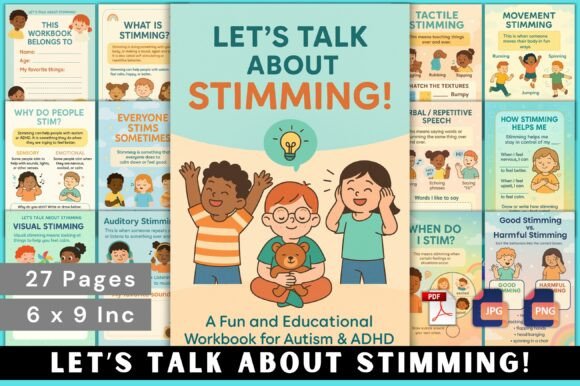
Let’s Talk About Stimming for Kids provides simple, clear explanations tailored for children. It helps them understand that stimming is okay and that it can be a helpful tool for managing emotions and staying calm. The workbook encourages self-acceptance and promotes a positive mindset around sensory differences, which is crucial for building confidence and self-esteem.
Interactive Learning Through Play
One of the standout features of this workbook is its interactive design. Rather than relying solely on text, it includes drawing prompts, reflection pages, and self-expression exercises that make learning about stimming engaging and fun. These activities allow children to explore their own sensory preferences and communicate their needs in a safe and supportive environment.
For example, a child might be asked to draw a picture of something that makes them feel calm or to write about a time when they used a stimming behavior to help themselves feel better. These exercises not only reinforce understanding but also encourage emotional awareness and self-reflection.
Supporting Emotional Regulation and Self-Awareness
Emotional regulation is a key component of Let’s Talk About Stimming for Kids. The workbook helps children recognize what feels good, what doesn’t, and how to communicate their needs effectively. This is particularly important for neurodivergent children who may struggle with expressing their feelings in traditional ways.
By teaching kids to identify and label their emotions, the workbook supports the development of coping strategies that can be used both at home and in school. It also emphasizes the importance of self-advocacy, helping children learn to ask for what they need without feeling ashamed or embarrassed.
Inclusive Language and Neurodiversity Celebration
The language used throughout Let’s Talk About Stimming for Kids is inclusive and celebratory of neurodiversity. Instead of framing stimming as a problem to be fixed, the workbook presents it as a natural part of being human. This approach helps reduce stigma and fosters a sense of belonging among children who may feel different from their peers.
By promoting self-acceptance and respect for individual differences, the workbook helps children build resilience and confidence. It also supports parents and educators in creating more inclusive environments where all children feel valued and understood.
Comparing Options: What Makes This Workbook Unique
When considering resources for children who stim, there are several options available. Some workbooks focus primarily on behavioral modification, while others take a more holistic approach. Let’s Talk About Stimming for Kids stands out because it prioritizes understanding and acceptance over correction or control.
Unlike some other tools that may emphasize compliance or conformity, this workbook encourages exploration and self-expression. It also includes a variety of activities that cater to different learning styles, making it accessible to a wide range of children. Additionally, the inclusion of visual elements such as drawings and diagrams helps reinforce concepts in a way that is easy to grasp.
While there are other workbooks that address sensory processing and emotional regulation, few offer the same level of support for self-acceptance and neurodiversity celebration. This makes Let’s Talk About Stimming for Kids a valuable resource for families and educators looking for a compassionate and inclusive approach to supporting children’s sensory needs.
Practical Use Cases and Best-Fit Situations
Let’s Talk About Stimming for Kids is ideal for children who are beginning to explore their sensory experiences or who may feel self-conscious about their stimming behaviors. It can be used as a supplement to therapy sessions, a tool for classroom activities, or a way for parents to engage in meaningful conversations with their children about emotions and self-care.
It is also beneficial for children who may have difficulty expressing their feelings through words. The visual and interactive nature of the workbook allows them to communicate in a way that feels natural and comfortable. Additionally, the compact size and printable format make it easy to use anywhere, whether at home, in school, or during outings.
Limitations and Considerations
While Let’s Talk About Stimming for Kids is a great resource, it is not a substitute for professional guidance. Children with more complex sensory or emotional needs may require additional support from therapists or specialists. It is also important to note that the workbook is designed for general educational purposes and may not address every unique situation or challenge.
Additionally, while the workbook is written for children, it is recommended that parents or educators read through the content first to ensure it aligns with their child’s specific needs and developmental stage. This will help them provide the most effective support and guidance.
Making an Informed Decision
Choosing the right resource for a child’s sensory and emotional needs requires careful consideration. Let’s Talk About Stimming for Kids is a thoughtful, well-designed tool that supports self-awareness, emotional regulation, and self-acceptance. However, it is not the only option available, and its effectiveness may vary depending on the child’s individual needs and circumstances.
If your child is struggling with sensory processing or emotional regulation, it may be helpful to consult with a qualified professional to determine the best approach. That said, Let’s Talk About Stimming for Kids can be a valuable addition to any child’s learning toolkit, especially for those who benefit from a more inclusive and accepting approach to sensory behaviors.