Unlocking Cognitive Potential: The Critical Thinking Workbook as a Tool for Mindful Growth
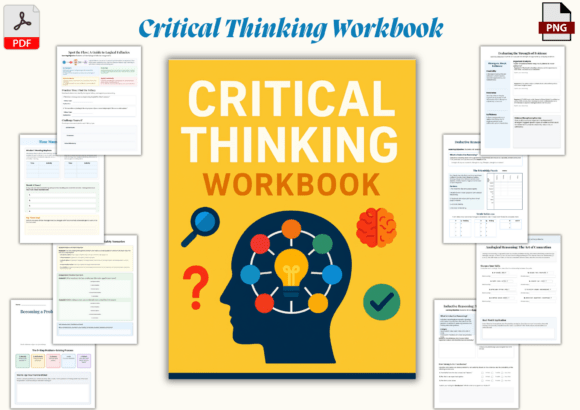
In an era where information is abundant and decision-making is complex, the ability to think critically has never been more essential. The Critical Thinking Workbook offers a structured yet engaging approach to cultivating this vital skill set. Designed with both educators and self-directed learners in mind, this 8.5 x 11 inch workbook features 18 pages of thought-provoking content that encourages deeper analysis, logical reasoning, and creative problem-solving.
The Core of Critical Thinking
Critical thinking is not just about questioning facts—it's about evaluating evidence, identifying biases, and constructing well-reasoned arguments. The Critical Thinking Workbook is built around these principles, offering exercises that challenge users to engage with material from multiple perspectives. Each page is crafted to stimulate intellectual curiosity while reinforcing foundational cognitive skills.
Engaging Exercises for Logical Development
One of the standout features of the Critical Thinking Workbook is its collection of fun and challenging exercises. These include logic puzzles, scenario-based questions, and visual challenges that encourage observation and deduction. For instance, a typical exercise might present a real-world situation—such as a community planning issue—and ask the user to identify potential solutions, weighing the pros and cons of each option.
These activities are designed to be interactive, making the learning process feel less like a chore and more like an exploration. By breaking down complex problems into manageable parts, the workbook helps users develop a methodical approach to thinking. This is particularly beneficial for students who may struggle with abstract concepts or those looking to refine their analytical abilities for professional settings.
Real-World Applications and Benefits
The practical value of the Critical Thinking Workbook lies in its focus on real-life problem-solving. Whether you're a teacher preparing lesson plans, a student studying for exams, or a business owner analyzing market trends, the skills developed through this workbook can be applied across various domains.
For example, a teacher might use the workbook’s scenarios to help students understand how to evaluate sources of information or construct persuasive arguments. A researcher could benefit from the step-by-step lessons that promote structured thinking, ensuring that data interpretation is both accurate and unbiased. Even hobbyists and creators can enhance their decision-making by applying the critical thinking techniques outlined in the workbook.
Visual Puzzles and Structured Learning
Visual puzzles are another key component of the Critical Thinking Workbook. These exercises are designed to sharpen observational skills and encourage deductive reasoning. By presenting users with images or diagrams that require careful examination, the workbook fosters a habit of attention to detail—a crucial trait in fields such as design, engineering, and scientific research.
Moreover, the structured format of the workbook ensures that learners progress at a steady pace. Each section builds upon the previous one, reinforcing concepts and gradually increasing complexity. This approach is especially effective for individuals who prefer a guided learning experience, as it provides clear milestones and a sense of accomplishment with each completed task.
Who Can Benefit from the Critical Thinking Workbook?
The Critical Thinking Workbook is not limited to a specific audience. Its versatility makes it suitable for a wide range of users, including:
- Students: From elementary school to higher education, the workbook supports academic growth by enhancing comprehension, analysis, and argumentation skills.
- Professionals: In industries that require strategic thinking, such as finance, healthcare, and technology, the workbook aids in decision-making and risk assessment.
- Researchers: The emphasis on evidence evaluation and logical structure aligns well with the demands of rigorous academic and scientific inquiry.
- Business Owners: Entrepreneurs can leverage the workbook’s problem-solving strategies to navigate challenges and make informed choices.
- Home Educators: Parents and tutors can use the workbook as a supplement to traditional curricula, fostering independent thinking in young learners.
- Hobbyists and Creators: Whether crafting art, writing stories, or designing projects, the workbook encourages a mindset of thoughtful innovation.
Each user group can tailor the workbook to their needs, using it as a standalone resource or as part of a broader learning strategy. The flexibility of the content ensures that it remains relevant across different stages of life and career development.
Considerations for Effective Use
To maximize the benefits of the Critical Thinking Workbook, it's important to approach it with intention. While the exercises are designed to be self-contained, they work best when integrated into a larger framework of learning. For instance, pairing the workbook with discussions, group activities, or digital tools can deepen understanding and reinforce concepts.
Additionally, users should be mindful of their own cognitive patterns. The workbook is not a quick fix but a long-term investment in mental agility. Consistent practice is key to developing the habits of critical thinking that lead to smarter decisions and more effective communication.
Conclusion
The Critical Thinking Workbook stands out as a valuable resource for anyone seeking to improve their cognitive abilities. Through its combination of engaging exercises, real-world applications, and structured learning, it offers a comprehensive approach to mastering logic, reasoning, and analytical skills. Whether used in classrooms, homes, or personal study, this workbook transforms the act of thinking into a dynamic and rewarding journey. By investing time in critical thinking, individuals empower themselves to navigate an increasingly complex world with confidence and clarity.